The Journey So Far - Part II
[this post is a continuation of a previous blog entry]
The key idea that got me moving again was, ironically, the inverse of the development rule that had served us so well when developing Balance of Power: the worst thing is out rule.
Instead of worst thing out, it turned out that the route forwards was even more extreme - only the best thing stays in. And that best thing was the grid. In BoP, the grid was just one instrument in a band but, even amongst all the noise, it stood out to developers and playtesters alike as the most unique component of the game. What if, I wondered, the grid could start a solo career?
Once again, the idea came at night and in a furious creative burst but - just a few hours later - a new game had emerged from the ashes. No longer Balance of Power, but not quite Garden of Ithaca - this was Grid Grab. The idea was simple: take the fun of Tetris and tangrams and efficiently packed suitcases, and turn it into a multiplayer game. Of course, the first iteration remained quite flawed but, in another tumble of rapid iteration, Grid Grab was taking shape and, in many ways, resembled the game Garden of Ithaca would come to be. The game had also been skinned - no longer just Grid Grab, but Grid Grab: Garden. I was attracted to a botanical theme for a couple of reasons.
First, color. The natural world offered a huge range of different flowers to work with, allowing each different tile shape to have its own distinctive ~vibe~. Second, I enjoyed the whimsy - “I play forget-me-nots!” tickled something inside of me, as did the idea of each player being a disgruntled gardener arguing with their competitors about the optimal flower bed arrangement.
For the first time, unlike at any point with BoP, I felt I had a game that was truly fun and worthy to be shared with the wider world. My board game head space began to focus more on the business of game making rather than the workshop of game design. However, once I began talking to artists, I realized the concept was still lacking a certain depth that made it difficult to translate my idea into a coherent design style. I still had ideas about characters, symbols, motifs but they were incoherent and the story behind the game - gardeners arguing about how to design their plot of land - felt thin. And so I took to the internet, researching all things notable and mythical in the world of gardens. Perhaps Monet’s lily ponds, or the opulent jardins of Versailles… still, each felt somewhat incongruous with the core elements of the game.
And then, at last, I found the Garden of Alcinous - a place where the fruits never rot nor fail; a place blessed by the gods to be in bloom forever.
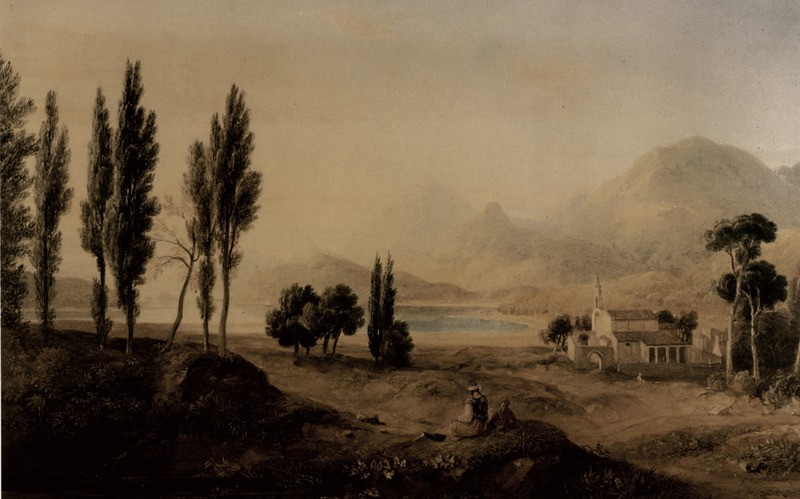
This was a story nestled within one of the greatest, most enduring tales of all time: The Odyssey. And, what’s more, the glove fit - players are Greek gardeners, toiling year after year for Odysseus to win favor from the gods and immortalize their garden design.
There was still a long road to go but, at last, I felt I had not only the core mechanics for the game, but I also had a compelling package in which to wrap them - a world in which the game could flourish.
To stay in the loop on all Ithaca updates, sign up to the mailing list here!